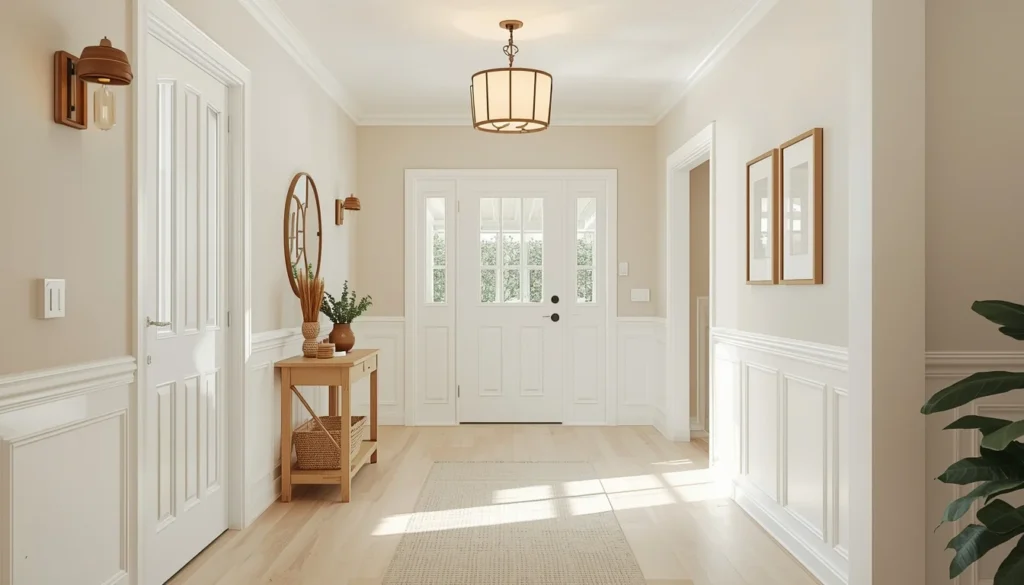
Entryways and hallways do more heavy lifting than almost any other part of the home. They are the first impression, the connector between rooms, and often the most overlooked when it comes to thoughtful design. Choosing the right paint color for these spaces can instantly elevate your home, making it feel brighter, larger, and more intentional.
Because entryways and hallways usually have limited natural light and high foot traffic, paint color selection needs to balance beauty, practicality, and flow. The goal is not just to pick a trendy shade but to create a welcoming transition that complements the rest of your home.
This guide breaks down the best paint colors for entryways and hallways, explains why they work, and helps you choose a shade that feels timeless and functional without overthinking it.
Why Paint Color Matters in Entryways and Hallways
Unlike living rooms or bedrooms, these spaces are rarely furnished heavily. Paint becomes the main design element. The right color can make a narrow hallway feel wider, a dark entryway feel open, and a disconnected floor plan feel cohesive.
A well-chosen paint color can:
- Improve lighting in low-light areas
- Create a smooth visual flow between rooms
- Set the tone for your home’s overall style
- Hide everyday wear better than stark whites
Because these areas are transitional, subtlety often works better than bold statements, but that does not mean boring.
Best Neutral Paint Colors for Entryways and Hallways
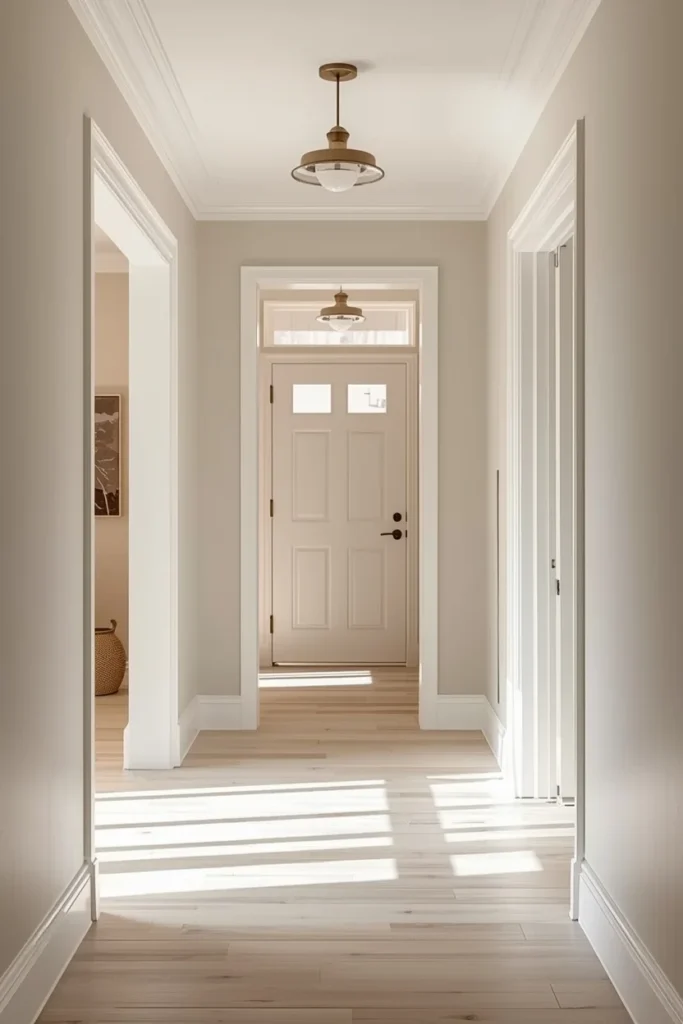
Neutral tones are the safest and most versatile option. They work with nearly every design style and age gracefully over time.
Warm Whites
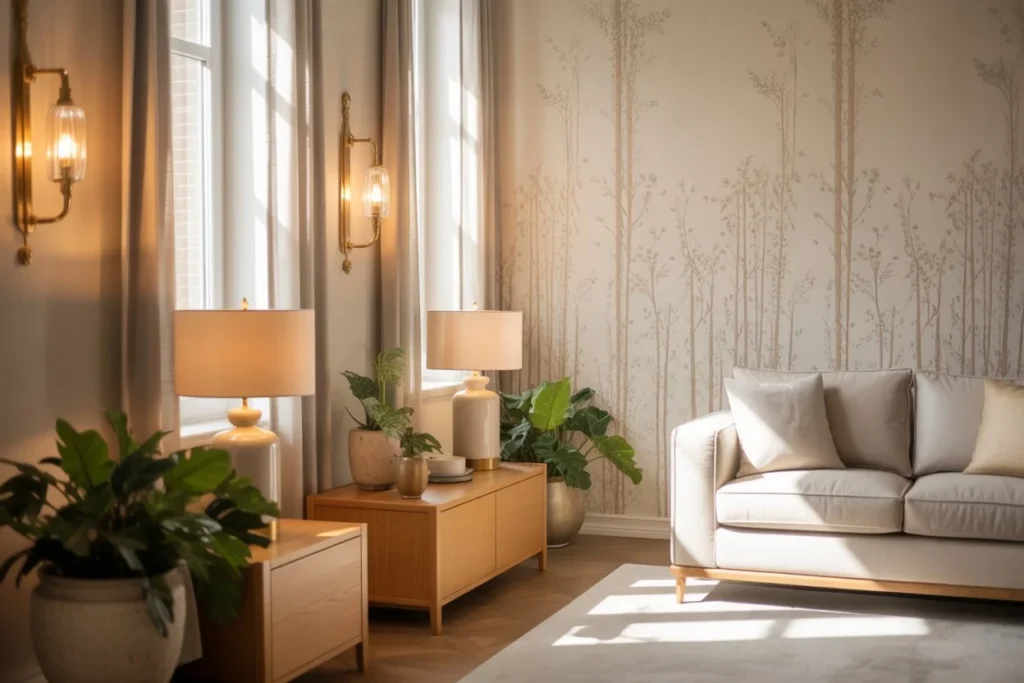
Warm whites create a clean, welcoming feel without looking stark. They are perfect for small entryways and dark hallways.
Why they work:
- Reflect light beautifully
- Make spaces feel open and fresh
- Pair well with wood, metal, and stone
Look for whites with subtle beige or cream undertones rather than bright, cool whites.
Soft Beige and Greige
Greige, a blend of gray and beige, has become a favorite for transitional spaces.
Why they work:
- Add warmth without heaviness
- Hide scuffs better than pure white
- Transition smoothly between rooms
These tones are especially effective in open-concept homes where hallways connect multiple spaces.
Light Taupe
Taupe offers more depth than beige while remaining neutral.
Why it works:
- Feels cozy yet refined
- Complements both warm and cool palettes
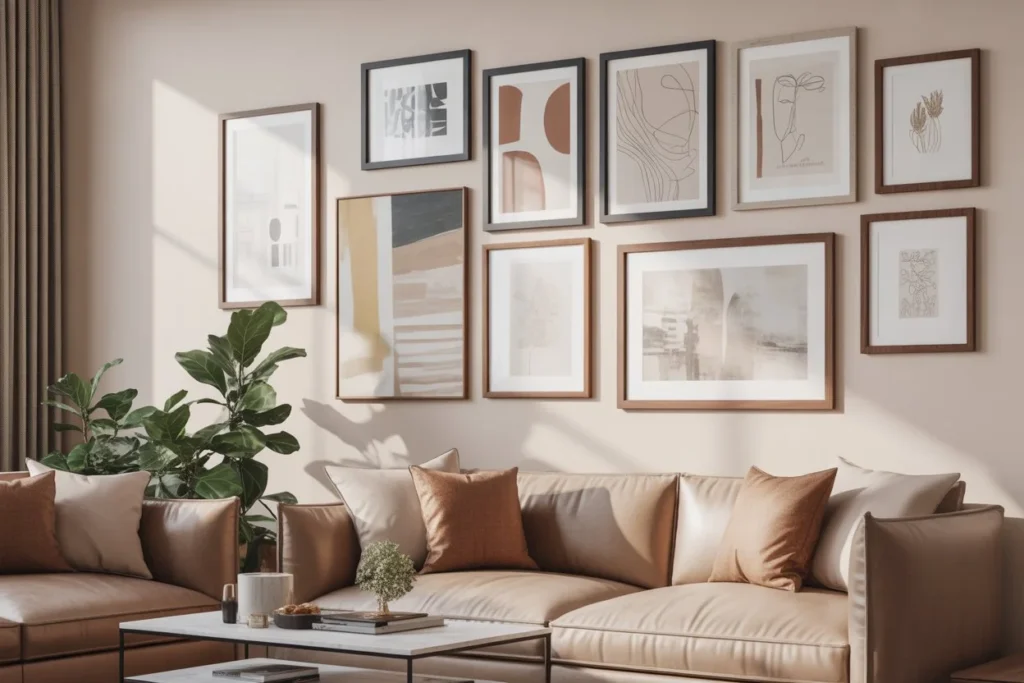
- Works well with gallery walls and trim
Best Light Paint Colors for Small or Narrow Hallways
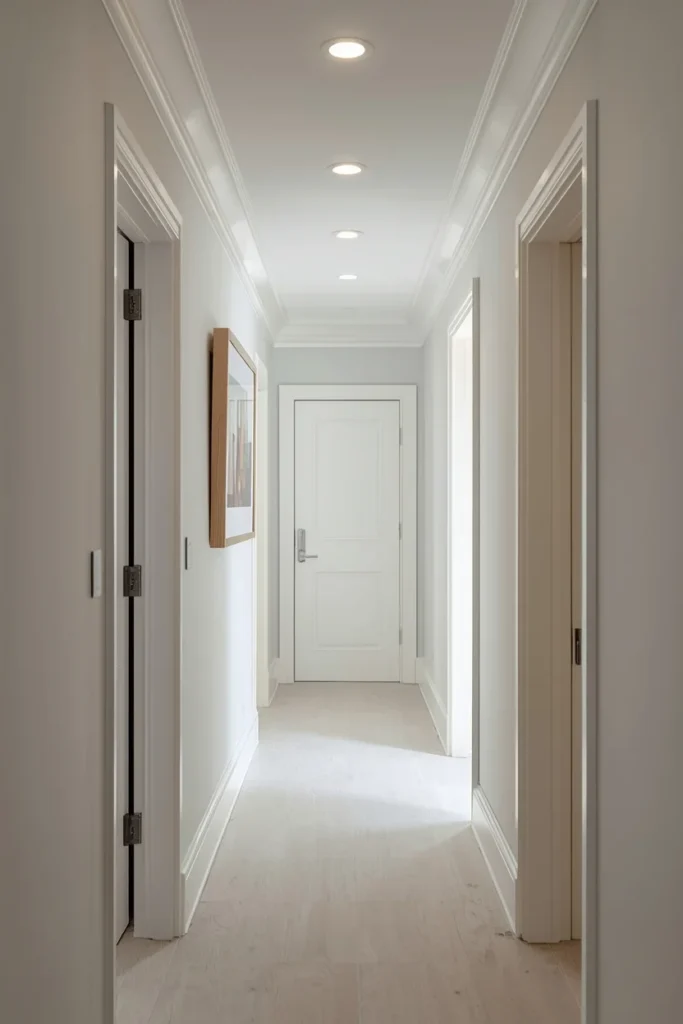
Small hallways benefit from colors that reflect light and reduce visual clutter.
Pale Gray
Light gray is a modern classic when done right.
Why it works:
- Adds subtle contrast without darkening the space
- Works well with white trim
- Looks clean and polished
Choose a gray with warm undertones to avoid a cold feel.
Soft Cream
Cream tones add warmth and softness, especially in homes with traditional or farmhouse styles.
Why it works:
- Warmer than white
- Makes spaces feel inviting
- Enhances wood floors and doors
Blush and Soft Peach Neutrals
Barely-there blush tones are surprisingly versatile.
Why they work:
- Add warmth without being overpowering
- Flatter most lighting conditions
- Feel fresh and modern
These shades are ideal if you want something different but still subtle.
Best Dark Paint Colors for Entryways and Hallways
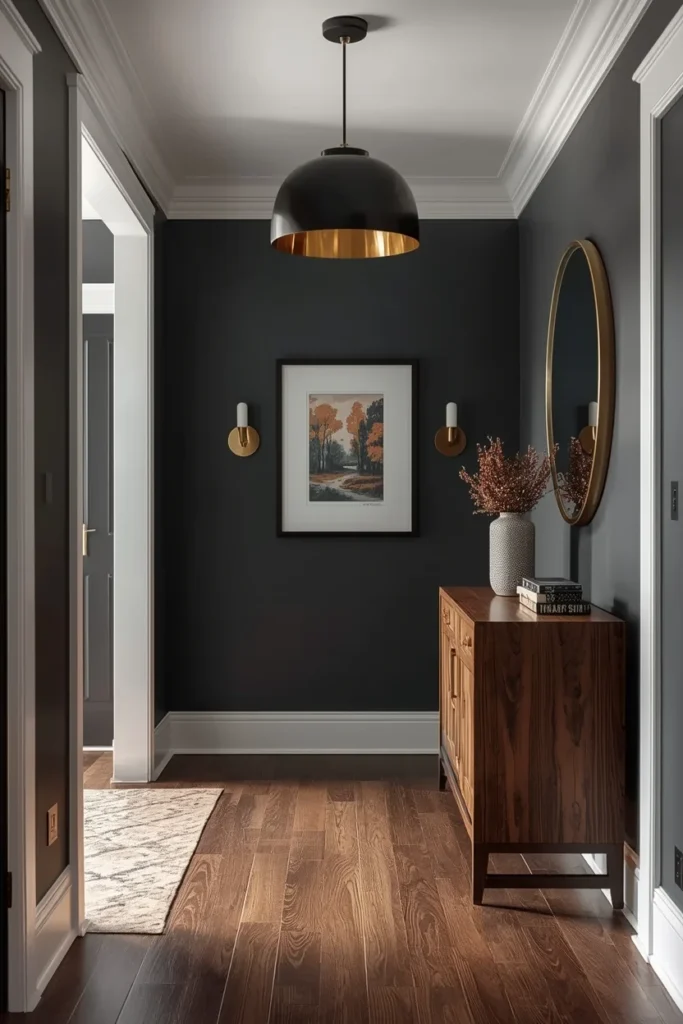
Dark colors can be stunning when used intentionally, especially in entryways.
Charcoal Gray
Charcoal adds drama without feeling harsh.
Why it works:
- Creates a bold first impression
- Pairs beautifully with white trim
- Adds depth and sophistication
Use it in entryways with good lighting or statement light fixtures.
Deep Navy Blue
Navy is a timeless choice that feels both classic and modern.
Why it works:
- Adds richness and contrast
- Complements brass and gold accents
- Works well with artwork and mirrors
Navy hallways look especially striking with warm lighting.
Forest Green
Muted greens bring an organic, calming feel.
Why it works:
- Connects indoor spaces to nature
- Adds color without overwhelming
- Pairs well with wood and neutral decor
Best Warm Paint Colors for Welcoming Entryways
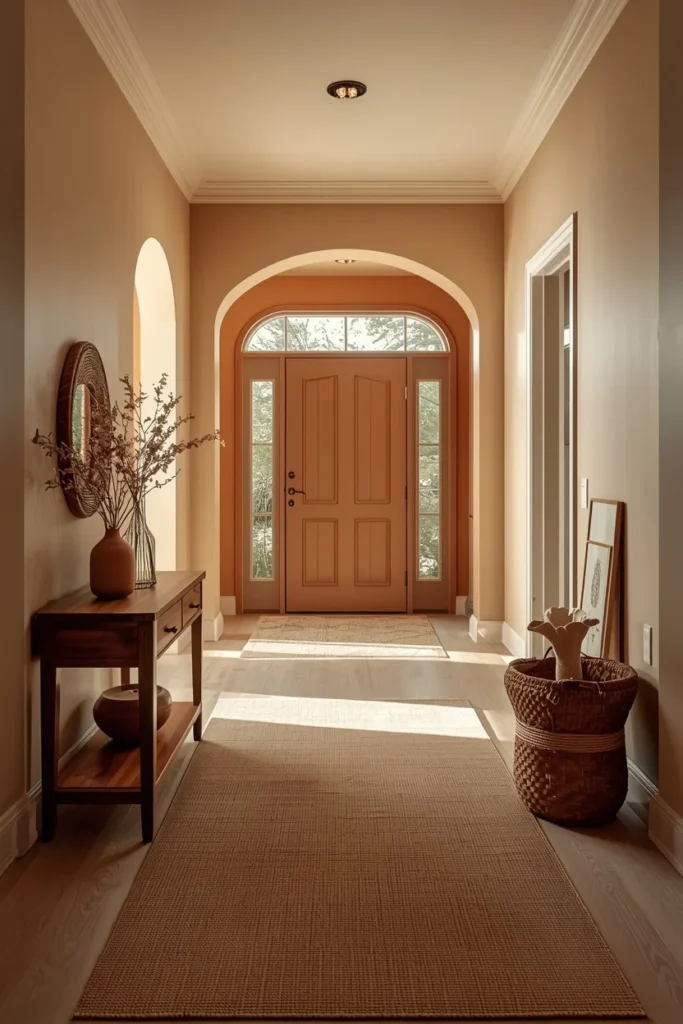
Warm tones instantly make guests feel at home.
Soft Terracotta
Modern terracotta is muted and earthy, not bold or rustic.
Why it works:
- Adds warmth and personality
- Feels cozy and grounded
- Complements neutral furniture
Muted Mustard or Ochre
Used lightly, these tones feel cheerful and refined.
Why they work:
- Brighten darker spaces
- Add personality without chaos
- Pair well with natural textures
Best Cool Paint Colors for Hallways
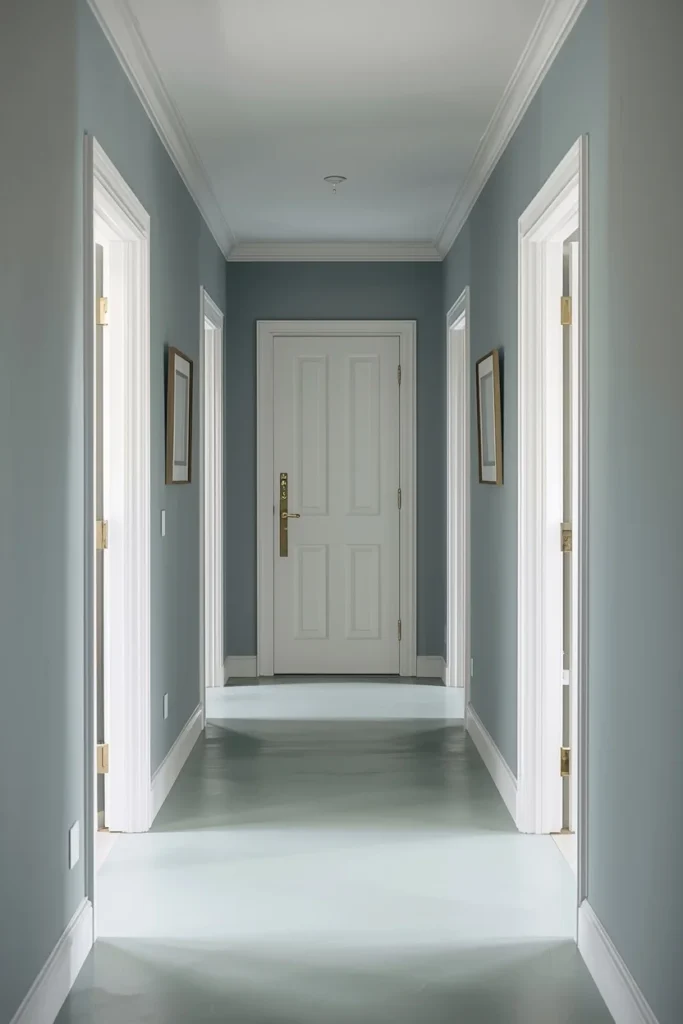
Cool tones work well in contemporary homes and spaces with clean lines.
Blue-Gray
Blue-gray tones balance calmness and structure.
Why they work:
- Feel soothing and polished
- Work well with modern decor
- Add subtle color interest
Sage Green
Sage is one of the most versatile hallway colors.
Why it works:
- Soft and calming
- Works with both warm and cool palettes
- Feels timeless rather than trendy
Paint Color Ideas for Long Hallways
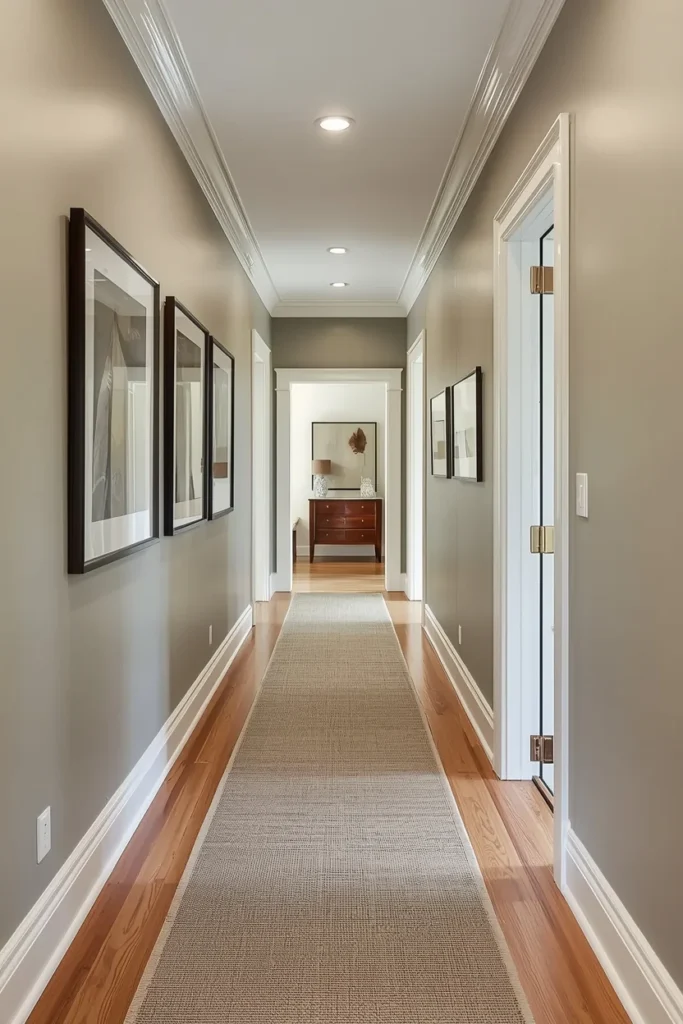
Long hallways can feel repetitive if painted incorrectly.
Monochromatic Neutrals
Using one neutral tone throughout creates visual continuity.
Two-Tone Walls
Painting the lower half a darker shade and the upper half lighter adds interest and breaks up length.
Accent End Wall
Painting the far wall a slightly deeper tone creates depth and draws the eye forward.
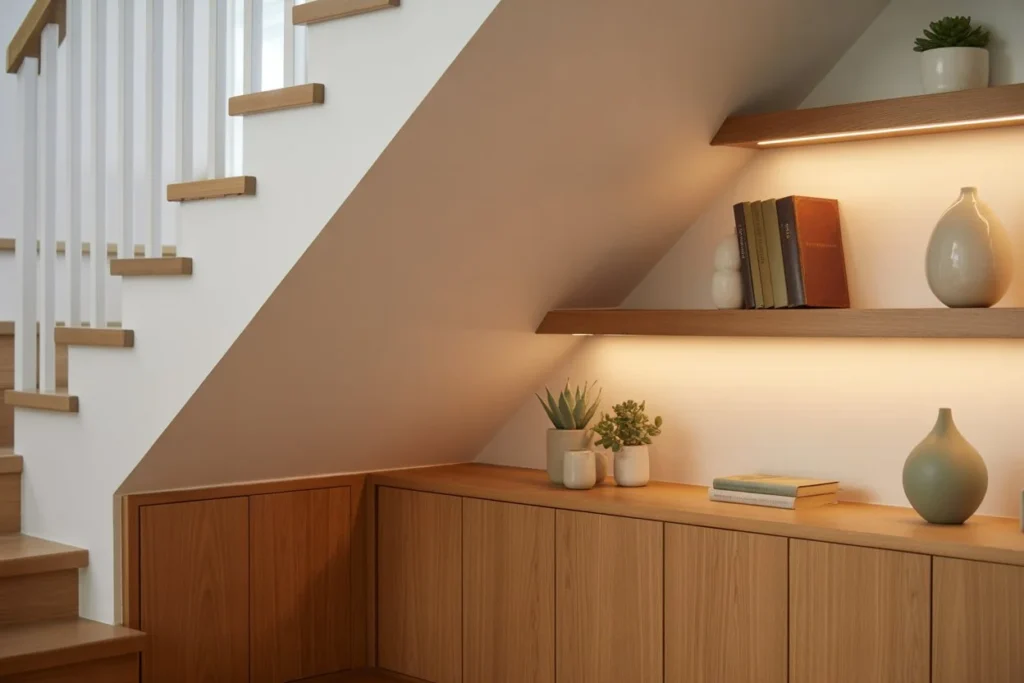
Best Paint Colors for Entryways with Stairs
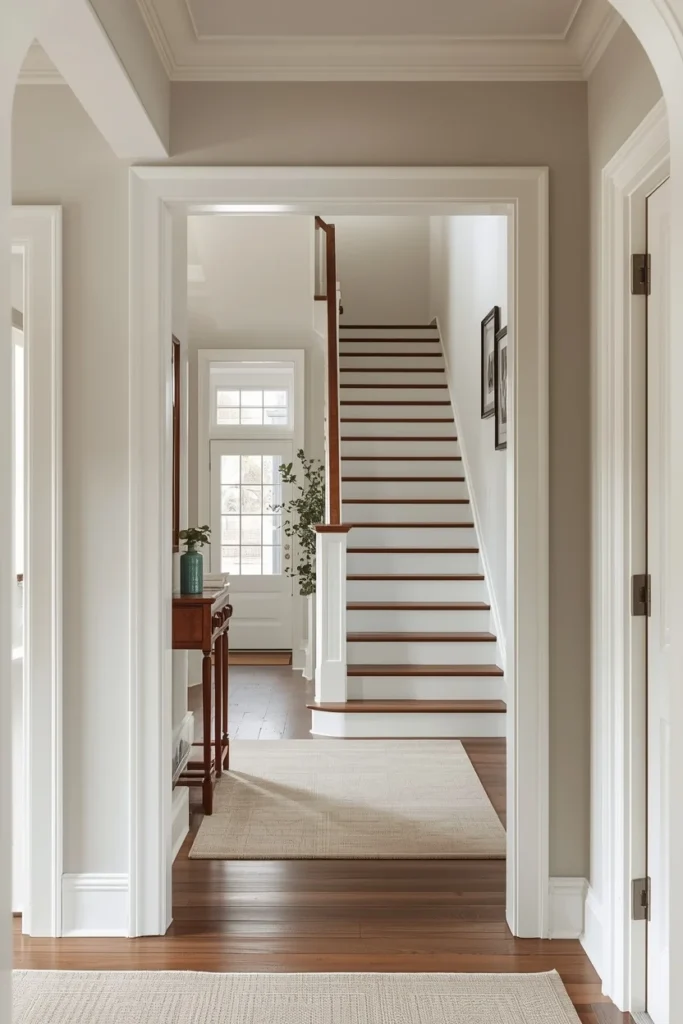
Entryways with stairs benefit from cohesive color flow.
Soft Gray or Greige
Keeps focus on architectural features.
Warm White with Contrast Trim
Highlights stair railings and moldings.
Muted Blue or Green
Adds interest without competing with stair design.
Coordinating Paint Colors with Trim and Doors
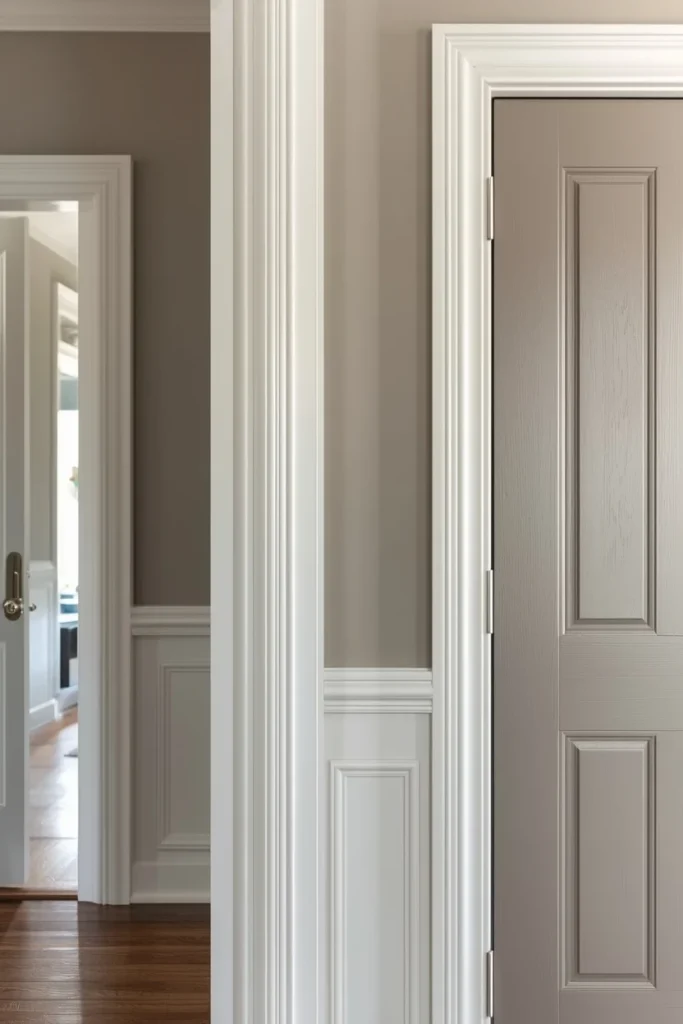
Trim and door colors matter just as much as wall color.
- White or off-white trim keeps things crisp
- Matching doors to wall color creates a seamless look
- Dark doors add contrast and sophistication
Consistency is key, especially in connected spaces.
Common Paint Color Mistakes to Avoid
- Choosing colors without testing them in your lighting
- Using stark white in dim hallways
- Going too dark in narrow spaces without adequate light
- Ignoring how the color flows into nearby rooms
Always test samples on multiple walls and view them at different times of day.
Final Thoughts
The best paint colors for entryways and hallways are the ones that balance light, warmth, and flow. These spaces should feel welcoming, intentional, and connected to the rest of your home. Whether you prefer soft neutrals, subtle color, or bold depth, the right paint choice can transform these often-forgotten areas into design highlights.
Focus on the mood you want to create rather than chasing trends. When chosen thoughtfully, a hallway or entryway paint color can remain timeless for years while still feeling fresh and stylish today.